
Holbach’s philosophical system is based on anthropological foundations –
An ethnic German, Paul Holbach (1723–1789) was one of the classic political ideologues of the bourgeois class in the 18th century. His political ideas were part of the revolutionary views of the bourgeois class at that time, which were directed mainly against idealism, religious obscurantism, the feudal system of economic exploitation, and political absolutism.

Both Holbach and other enlighteners throughout Europe at that time left open the space for the people’s right to revolution, i.e., armed change of the system based on the political formula of popular sovereignty.
The overthrow of the system of feudal relations dating back to the early Middle Ages and its replacement by a new system of civil society and capitalist economy certainly had global significance because it showed other countries both in and outside Europe the future development and became a model for later revolutionary changes. French revolutionary political philosophy was a source for all subsequent generations of European countries.
Paul Holbach was an ethnic German but settled definitively in Paris (France), where he became a central figure among the materialist philosophers, who at that time gathered in salons and exchanged their philosophical views on various social issues, including politics. Holbach himself was well acquainted with all previous philosophy.
In his works, he accepts and further elaborates materialist thought, connecting it with the study of natural sciences. Thus, Holbach achieved a philosophical synthesis of the French materialist understanding of nature with the English sensualist theory of knowledge. Holbach’s main philosophical work is „The System of Nature“. He also wrote „Natural Politics“, „Christianity Unveiled“, and „The Social System“. He also collaborated on the publication of the French „Encyclopedia“.
He believed, like all other enlighteners and encyclopedists, that in order to remove any supernatural forces from nature, it was necessary, first of all, to oppose a religion based on idealism and belief in proven scientific truth, which was the basis of materialist philosophy. Holbach proceeds from the fact that nature is the cause of everything.
Nature exists in itself; it will exist and act forever, and nature is its own cause. The movement of nature is a necessary consequence of its necessary existence. These are the basic positions of Holbach’s materialist monism. He interpreted matter as everything that in any way affects our senses. Holbach rejected the external impulse that sets matter in motion and expressed the idea of the self-motion of matter. He understood movement as displacement, i.e., in the spirit of metaphysical materialism.
With these views, Holbach set out to address the issue of man, who, for him, is a natural being. Man is a product of nature, lives in nature, and is subject to the laws of nature. Man can never free himself from nature and cannot even go beyond nature in his thoughts. Like all materialists, Holbach recognizes sensitivity as one of the characteristics of mobile and specially organized matter.
Thinking is the result of highly organized matter. Reason is an ability inherent in organized beings, i.e., beings that are composed in a certain way. Holbach believed that thinking is achieved through feeling and perception. In this way, external reality is reflected, which at the same time encourages man to action, through which he becomes capable of changing himself as well as his social environment.
Holbach’s socio-political philosophy
After his philosophical reflections on the nature of man and his characteristics, Holbach moved on to the development of ethical, social, and political views.
All people in the world are composed of various racial characteristics and differ in their biological and physical makeup. These racial-biological differences are the basis of inequality among people, which are also the foundations of society and morality, and from which the social, moral, and stratification (class) order in the human community arises. Holbach, however, claims that inequality among people is not harmful to them but, on the contrary, beneficial. Holbach explains class stratification by different temperaments and abilities.
Food, climate, and air affect the structure of the organism and determine its inclinations. Temperament also depends on upbringing and lifestyle. Therefore, social and state institutions of various natures largely build a person. Of all social and state institutions, the most important for the formation of people’s character is the law (lex), which should reflect the general will of society and the preservation of the general interest.
Reason is able to point people to the right path and happiness. Reason teaches people to value other people. Thanks to reason, a person realizes that other people with whom he lives are necessary for him. Reason also teaches a person to distinguish good from evil. Holbach therefore argued that for personal happiness, the help of other people was necessary. Therefore, it is in the personal interest of each individual to cooperate with other people. The desire for happiness is the true interest of each individual, but happiness can only be achieved in society, i.e., with the help of others.
For Holbach, society represents a whole consisting of a multitude of families and individuals who unite for the reason that they can satisfy mutual needs as much as possible, ensure mutual assistance, and the possibility of peaceful use of the goods given to man by nature and human labor. Accordingly, Holbach concludes that the basic duty of politics, i.e., political action and institutions, is to preserve the social community and remove everything that hinders its sociability, i.e., interpersonal cooperation.
For Holbach, the natural essence of man is his egoism, the pursuit of his own benefit. However, reason, as another human characteristic, directs him to seek a common life with other people, so that sociability is a result of human rational nature.
People come together for the sake of a common life in which individual interests can be preserved and realized in a common society, i.e., specifically, in a common political organization called the state. Therefore, people conclude a tacit and informal/formal contract on the basis of which they commit themselves to mutual services, cooperation, and assistance, all, essentially, for the sake of individual benefit but in principle without violating the interests and benefits of other members of the community.
However, since man, by his biological nature, is very inclined to satisfy his passions without regard for the interests of his environment, this kind of “state contract”, as defined by Thomas Hobbes (1588‒1679) in his cult work “Leviathan”, is a necessary force to which all citizens of the political community had to submit. In such a political community, nothing could be demanded from other members of the community that would not be beneficial to every other individual of the same community. This force that regulates mutual relations in the state is the law (lex). The (good, generally beneficial) law expresses the general will of the social community as well as the preservation of the common interest for which the state exists.
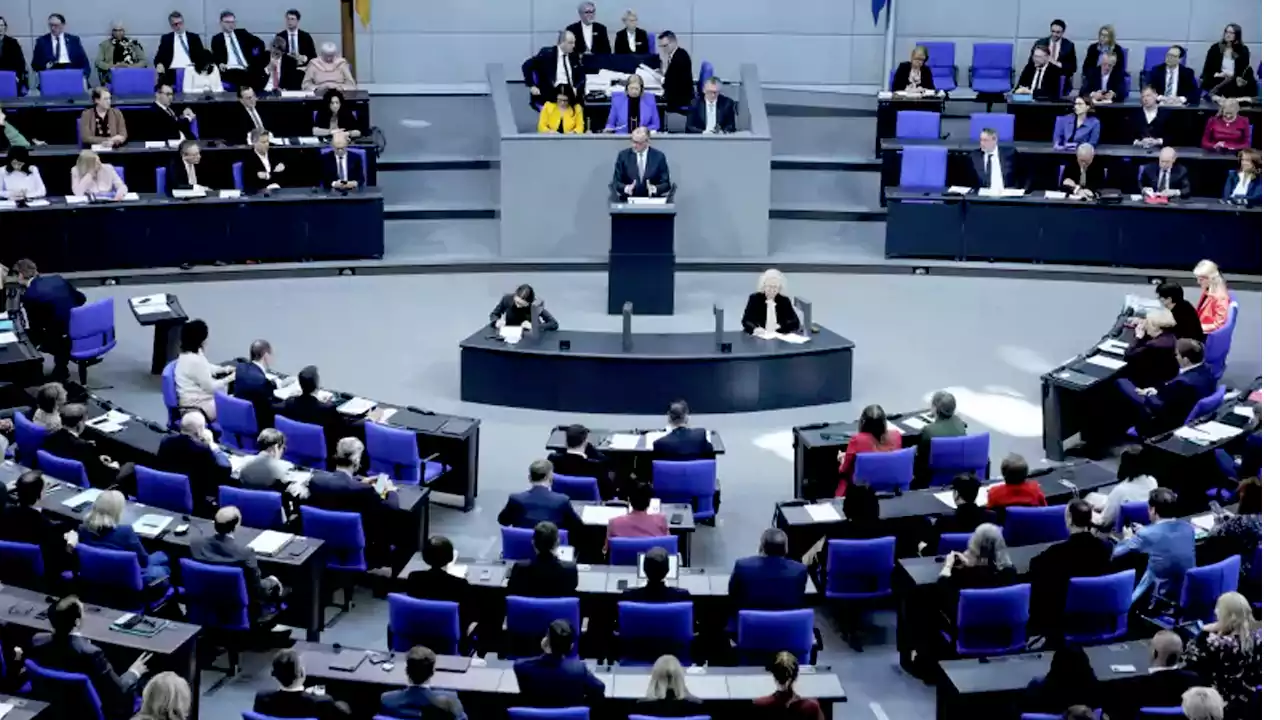
However, to realize this general will, it was necessary to build a special political body that would deal with laws, which was a parliament or a national assembly. In this regard, the question of sovereignty, the right of legislation, and representative forms of power, i.e., governance, arose. Holbach accepted the principle of a representative system in relation to these issues. First of all, the entire society cannot deal with legislation. But all laws that the community’s representation passes must receive the general consent of society. Without this general consent, laws are violent and usurping, i.e., illegitimate. Just as the social community has handed over power to the administration (i.e., the government) to ensure that same community and to contribute to it as much as possible in charity, to defend its rights, so too has that society the right to change that same power, to change its form, but retaining supreme authority for itself.
Thus, Holbach established the principle of popular sovereignty (democracy), a representative and responsible authority (parliament, government) that can be overthrown from power at any time if it violates the principles of natural and rational law, enshrined in the social contract. Rulers, i.e., authorities, must be servants of the people, not their masters. For Holbach, the right to rule, i.e., authority, is possessed only by those who are able to bring happiness to all individuals and the social community in general. Otherwise, the authority is considered to be usurpatory, i.e., undemocratic. Basically, according to him, no one has the natural right to command. This right is obtained by the human community.
Historically, according to Holbach, but also according to all Enlightenment encyclopedists, the masses did not know the origin of power and obeyed it because they believed in the medieval-feudal-church teachings that power comes directly from God. And accordingly, it could not be changed by any coups or revolutions. All Enlightenment people believed that ignorance (scientific) was the source of all the misfortunes of the human race, but that (scientific) enlightenment alone was capable of curing this social disease. For Holbach, the natural essence of man is his egoism, i.e., the pursuit of his own benefit. Reason, as another human characteristic, directs him to seek a common life with other human beings. Sociability, i.e., life in an institutionalized community, is the result of man’s rational nature, i.e., the power of reasoning on rational grounds.
Holbach’s political philosophy of the social contract and the rule of the human political community
First of all, Holbach rejects the teachings of the philosophers of the so-called “natural law” because it denies the reality of the so-called “state of nature”. For him, the state, i.e., a politically-institutionalized community of a certain group of people, is created by a social contract, i.e., a set of explicit or implicit agreements based on which people form a political society in some form. This social contract is made up of the laws of common life, and these laws have the obligation to ensure the general interest of the social community and therefore the individual interests of each person or group of people within the same political community. These general interests are threefold: 1) freedom, 2) private property, and 3) personal security.
Holbach believes that good laws are those that equalize all members of society (the same rights, duties, and obligations) to the detriment of natural differences. Other people must be given everything that we intend to receive from them, and therefore, the rights of others should be respected. The social community, or rather the state, must be organized on the principle of justice, since a society that is not based on this principle is a society of oppressors and slaves. Justice, in turn, requires the possession of humanity, i.e., philanthropy, compassion, and virtue. All these virtues originate from the social contract and constitute the natural rights of man.
The rule of this principle of contract must always be kept in mind, and the government itself is a great force that educates the social community, forms the character, and influences the passions of people. Holbach saw in politics the only source of happiness and unhappiness. Man brings with him the need for self-preservation and the pursuit of happiness. Society itself is obliged to help man achieve happiness.
Bad government, bad education, bad ideas, and bad institutions cause people unhappiness. Historically, it has happened that over time, the principles of freedom, security, and justice have disappeared so that the people have turned into a mass of slaves and the rulers into earthly gods. The human race, due to ignorance of its own nature, has become enslaved and has become a victim of bad governments.
For Holbach, the entire misfortune of the human race lies in the fact that the people are unenlightened and full of delusions and therefore do not know the truth. General popular delusions and ignorance are the causes of the heavy chains that secular tyrants and the church have forged for the people.
Thus, politics turned into pure banditry. The people were enslaved and did not dare to oppose either secular or church authority, while state laws were an expression of the desires and needs of the ruling classes, i.e., the nobility and the clergy. Thus, the general interest and general happiness were sacrificed to the personal interests and happiness of a small number of people who held administrative positions (aristocratic oligarchy). Thus, freedom, justice, security, and charity disappeared from the people, and politics exploited the property of the people by force and various malicious arts in order to subjugate and use them for the realization of the interests of those in power.
Holbach took as an example the French absolutism before the bourgeois revolution of 1789, which, in his view, had turned into a small group of robbers and bandits in power. Thus, legislation became the service of securing the interests of the aristocratic oligarchy, not the people. And the greatest of them were the French absolutist kings and their closest entourage, i.e., the court camarilla. Holbach harshly attacked the king and his court camarilla for exploiting the people, who thought minimally about the well-being of the people. The court camarilla’s attention was attracted only by endless wars and the constant search for material means to satisfy its greed. The camarilla’s goal was not the happiness of the people or the prosperous future of the state, but only the current benefit and satisfaction of their aristocratic needs. For Holbach, an unjust society was one-sidedly biased in favor of a small minority in power and unfairly towards the subordinate majority.
Holbach, knowing the French social system in both the political and economic context, predicted the collapse of the then state system, i.e., a revolution that would overthrow it. He demanded that the people organize a new government that would operate on the principles of the common good, on the principles of mutual obligations, as provided for by the social contract. However, Holbach did not openly call for revolution, but he was an advocate of the voice of reason and enlightenment as a means of improving people’s lives and the general improvement of the state of society.
The society he aspired to would be a just society, worthy of general social support, that would satisfy the diverse needs of all its members of the community, that would guarantee them personal security, freedom, and natural rights, and that, according to him, the happiness of the state consisted in this. Holbach was against the great inequality in the distribution of wealth in a society, and by the majority, he meant small and medium-sized individual owners. He demanded that the majority be formed by approximately equalizing ownership, so that the majority would be employed in useful work and enjoy prosperity, and thus avoid social unrest. He argued that there is no homeland for the one who has nothing, and therefore, Holbach seeks to settle accounts with the luxury of the feudal class.
As for the political form of government, for him, monarchy (the rule of one) was the first form of government that emerged on the model of patriarchal rule in society. He was a bitter enemy of despotism, but he also feared the masses, believing that they were led by passion rather than reason, and therefore the masses had to be “held in check” by enlightenment so that they would not go wild. The government had to be formed in such a way that it would work to ensure the happiness of the majority in society, and this could only be achieved if each member of society (citizen) had, within the limits of the law, the freedom that would allow them to achieve their happiness without harming other members of the same community. He believed that people in a democracy had no concept of freedom.
From freedom comes justice, but above all, it was necessary to preserve the uniqueness and private property of citizens of a political community. Holbach believed that taxes should only be imposed with the agreement of taxpayers, the distribution of taxes must meet the requirements of justice, and the government must give an account of how it used the money from taxes. However, the practice of spending money from public taxes on the luxury of the court and the court camarilla should be most decisively opposed.
Holbach essentially advocated a political system of constitutional monarchy, such as that which already existed in Great Britain at that time, with limited royal power, in contrast to the then-French model, which was based on absolute royal power. According to him, a constitutional monarchy was organized in such a way that it could ensure its citizens their natural and inalienable rights. However, Holbach argues that it is impossible to give a universal political system because each optimal political system in specific cases depends on several factors (morality, temperament, tradition, climate, anthropological characteristics, historical tradition…).
Finally, Holbach advocates complete freedom of thought, that is, of speech. Therefore, he fights fervently against religious errors, and therefore healthy philosophy (i.e., science) must dedicate itself to their extermination. The ideological tyranny of the church hinders the true spiritual life of man. Every religious idea is incompatible with nature and reason.
Final notes
Holbach’s political philosophy was aimed at the destruction of the feudal system, at the liquidation of absolutist arbitrariness as well as the tyranny of the church’s ideological obscurantism. In him, man is seen as a natural being, and therefore he calls on all people to return to nature, to enjoy the good that nature has given them, and to make the same possible for others in their environment. Man cannot be happy if he lives in isolation, but only in a social and/or political community. Holbach understands all the imperfections in people and human institutions as products of the delusions of reason. The social and political liberation of humanity depends exclusively on the liberation of reason from all prejudices.
The laws of nature are the key to true knowledge of the peace, social, and individual well-being of people. Holbach provides the opportunity to discover the laws and forces in nature on the basis of which the organization of human life should be built. Reason, i.e., (scientific) education (knowledge based on experience) must be the tool with which one enters the secrets of nature. Holbach essentially transferred the laws of nature to social life. The state and its unjust laws, as well as inequality in society, for Holbach, mean a violation of the laws of nature. However, man is able to change this state of affairs, and this depends exclusively on correct education and upbringing on scientific grounds.

