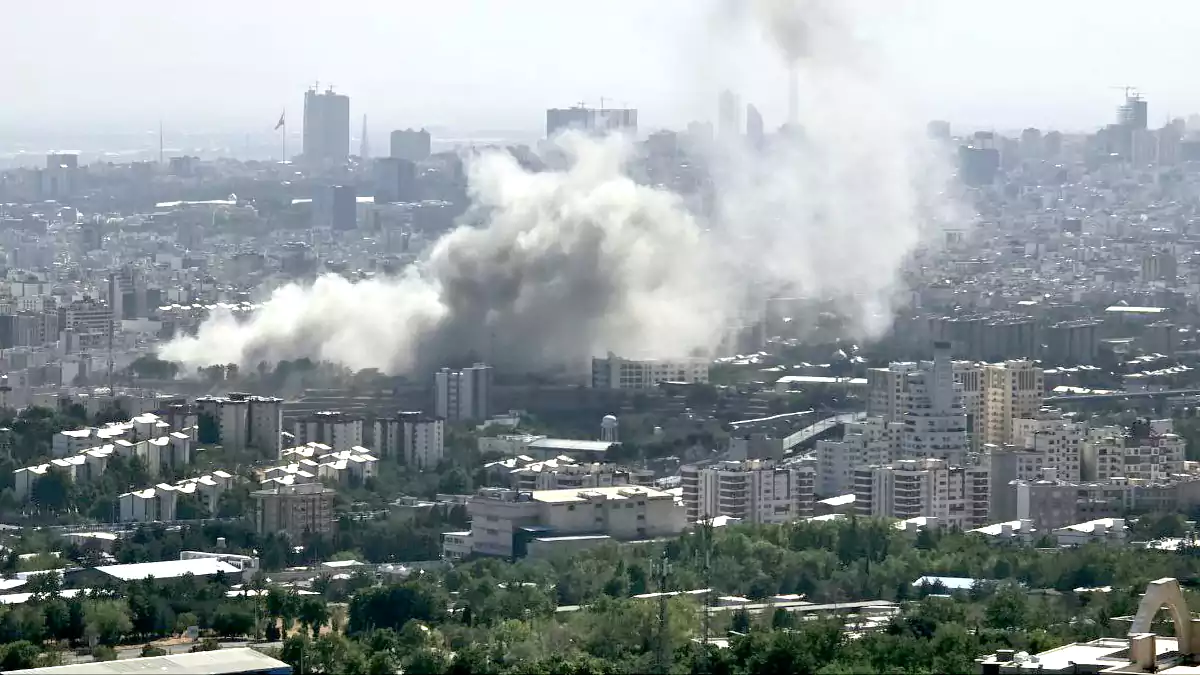
In recent months, tensions have been rising across Iran — and many experts believe the country may be approaching a historic turning point.

According to international security correspondent Jason Burke of The Guardian, today’s unrest echoes powerful lessons from the past. In his book The Revolutionists: The Story of the Extremists Who Hijacked the Nineteen Seventies, he explains how large, united movements can reshape a nation — but also warns that past mistakes must not be repeated.
Right now, signs of crisis are growing. In Tehran, the political atmosphere is tense. Iran’s foreign minister Abbas Araghchi has begun indirect talks with the United States in Oman. But many analysts say the gap between the two sides remains dangerously wide.
Meanwhile, U.S. President Donald Trump has repeatedly threatened military action — even suggesting that regime change in Iran could be the “best outcome.”
The situation is heating up fast.
Inside Iran, massive protests erupted in December 2025 and January 2026 — the largest since the 1980s. From Mashhad to Abadan, thousands took to the streets.
For many observers, the scenes resemble the final days of the Shah, Mohammad Reza Pahlavi — when millions protested before the monarchy collapsed.
Then, as now, the economy played a central role. Rising inflation has pushed many to the breaking point. Just like decades ago, traders and shopkeepers — especially in major markets — were among the first to protest when their livelihoods came under threat.
Another striking parallel is the powerful cycle of repression, mourning, and renewed protest. This same pattern once helped topple the Shah. Back then, protests intensified after followers of Ayatollah Ruhollah Khomeini clashed with security forces in the holy city of Qom.
When protesters were killed, mourning ceremonies turned into new demonstrations — and every 40-day mourning period fueled another wave of unrest.
Polish journalist Ryszard Kapuściński described how grief in Iran could transform into collective anger — especially when deaths were violent. Mourning became a powerful force of resistance.
Today, that cycle may be returning. A report by The Wall Street Journal says merchants from Tehran’s Grand Bazaar have called for nationwide demonstrations after observing 40-day mourning ceremonies for those killed in recent violence.
Read more: US Military Lethal Strike in the Caribbean Sea
Some estimates suggest the death toll in recent unrest could be extremely high — far exceeding the casualties seen during the late-1970s uprising, according to historian Ali Ansari.
But one major difference from the past is visibility. During earlier upheavals, international reporters were everywhere. Today, strict internet controls and limited foreign access make it harder to see what’s really happening on Iran’s streets.
Still, one thing is clear — anger is deep, widespread, and real. History also shows that revolutions often bring together many different groups — liberals, nationalists, religious followers, workers, marginalized groups — all united by one goal: change. But after victory, their visions for the future can clash.
That happened before — and it could happen again. Even after power shifted decades ago, it took years for new institutions to solidify, including security forces like the Islamic Revolutionary Guard Corps and the Basij. These groups later became central to maintaining state control — and remain key today.
So what happens if Iran’s government falls now? History suggests the answer may not be simple — or immediate. Change could come… but the future direction might remain uncertain for years.
One lesson stands above all: large-scale unity can bring transformation. But what comes after victory may be an entirely new struggle.
If the current system collapses, freedom, stability, and security may not arrive overnight.
Instead, the real battle — shaping the future — may only just begin.