
After constant and successive political outbursts from the Croatian side that, in addition to Nikola Tesla, Milutin Milanković is also a “Croatian scientist”, it is clear that this is a policy of political Croatization of all greats who, by their place of birth, originate from the present-day territory of the Republic of Croatia but are not ethnic Croats, by applying the so-called Croatian state law.
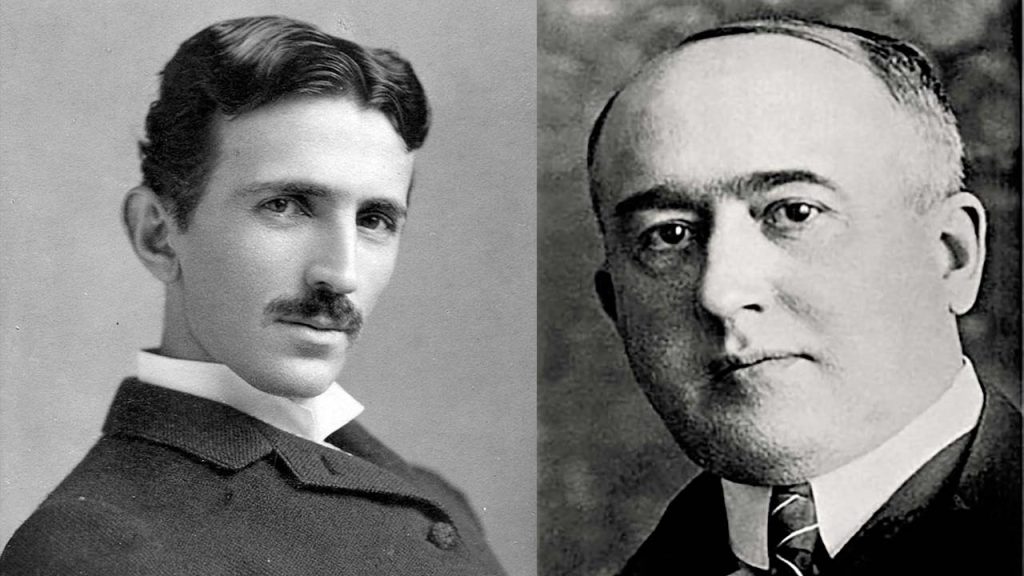
Based on this political philosophy, all residents of Croatia must be political Croats, and accordingly, everything that originates from the territory of Croatia must be Croatian. However, the question arises whether this terminology is appropriate at least in a linguistic sense, which also indirectly triggers discussions about Croats and Serbs in all contexts, including those “eternal” topics such as whether Croats and Serbs are the same people or whether all residents of Croatia are Croats.
In the short text below, I would like to recall the views of one of the greatest South Slavic philologists of the 19th century – Vuk Stefanović Karadžić – on these issues, which he expressed in 1861 as a response to his colleague, a Croatized Slovak, Bogoslav Šulek, who published the article “Serbs and Croats” in the Zagreb Neven (issue 8, 1856), claiming that Croats and Serbs are one people, that their language is one, that is, the same or common, that therefore their literature written in that language is common, and that not even religion divides them.
However, in his response to Šulek in the article “Serbs and Croats” in Vidovdan (No. 31, 1861), Vuk was explicit:
“…and now I think that the ancient Croats differed a little from the Serbs in language, and that today’s Čakavians are their true remnants and descendants, and that only they can rightfully be called Croats… The main habitats of today’s Čakavians are the islands or islets of the Adriatic Sea from Istria to behind Korčula… Croats can rightfully be called: 1) All Čakavians; and 2) Kekavians in the Kingdom of Croatia who have already become known by that name. Serbs can rightfully be called all Štokavians, no matter what religion they are and no matter where they live…”
In fact, in this article, Vuk openly accused the “Croatian patriots” of deliberately trying to destroy the Serbian ethnic corpus because they were the only ones in Europe to reject the basic principle of linguistic determination of nationality, i.e. that a people can speak only one language and declared Croats to be a people who, from a linguistic point of view, essentially speak three languages: Štokavian, Čakavian and Kajkavian/Kekavian.
According to Vuk (and not only him), in the then Kingdom of Croatia, in fact, there were also almost no real ethnic Croats living there, because most of the Čakavians were outside that kingdom. Therefore, Vuk introduced a new term: Croatians (Hrvaćani), which means all residents of the Kingdom of Croatia, regardless of their ethnicity, in contrast to the term Croat, which can only refer to the original ethnic Croats (Čakavians).
In doing so, Vuk challenged the basic principle of the Greater Croatian theory of Croatian state law, according to which all inhabitants of the Kingdom of Croatia were called Croats, including the Orthodox Serbs of Štokavian speech (in fact, ethnic language).
In our specific case, both Nikola Tesla and Milutin Milanković can only be Serbs in the ethnic sense, they cannot be Croats at all, while only possibly in the political sense they can be Croatians (Hrvaćani), although this term in their cases is still debatable, given that, for example, Nikola Tesla was not born in Croatia but in the then Military Krayina, which was not part of Croatia at that time.
Let us note that Tesla’s ancestors originated from Serbia and that they changed their original surname with the suffix -ić to Tesla after settling in the Military Krayina. The Teslas, like many other ethnic Serbs, experienced the genocidal policies of the Ustashi Roman Catholic Nazi regime of the Führer (Poglavnik) Ante Pavelić in the Independent State of Croatia during World War II because they were simply ethnic Serbs and Christian Orthodox.